
Void Studios is currently undertaking an ongoing research programme into rammed earth construction systems, focusing on material performance, mix optimisation, and the structural behaviour of earthen walls under controlled testing conditions.
The research has now reached its fifth iteration of experimental testing, marking a significant step in the studio’s long-term investigation into low-carbon, locally sourced, and materially honest construction systems.

Across these five rounds, Void Studios has tested a range of soil compositions, stabilisation methods, and compaction techniques, alongside comparative analysis of structural performance. Each iteration has involved the fabrication of full-scale mock wall assemblies, which are subsequently evaluated across multiple independent testing environments to assess compressive behaviour, consistency, durability, and construction repeatability.
A central component of the research is the systematic comparison of results between different material configurations. Variables such as clay content, aggregate grading, moisture ratios, and stabilisation agents have been adjusted incrementally in order to understand how subtle changes in composition influence structural outcomes. The use of repeated testing cycles allows for the identification of performance patterns that are not visible in single-pass experimental approaches.
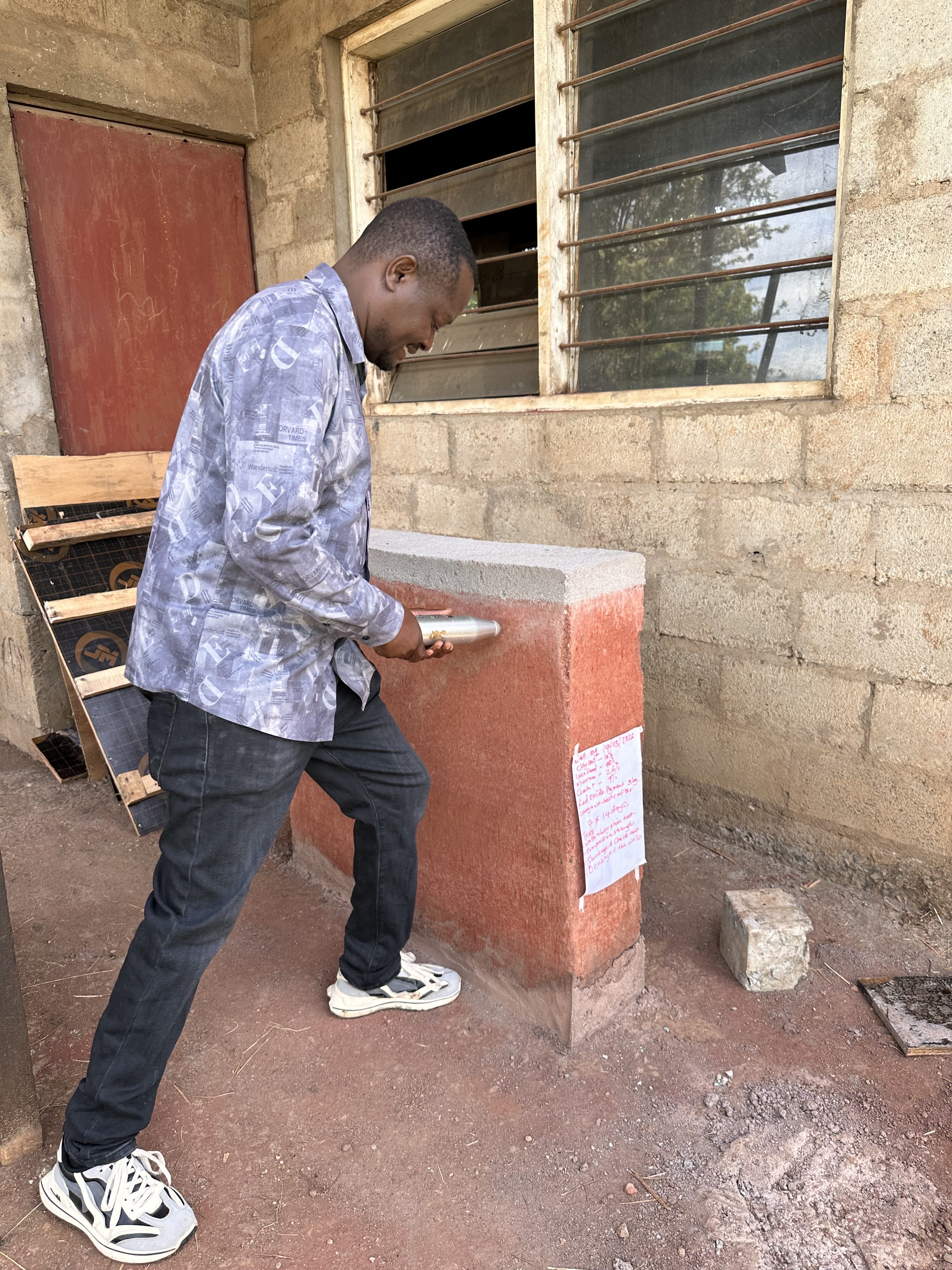
The mock wall assemblies have been subjected to evaluation in multiple test centres, enabling Void Studios to compare results across different testing methodologies and environmental conditions. This multi-site approach is intended to reduce the bias of isolated laboratory conditions and to better approximate real-world construction variability.

Beyond material experimentation, the research also engages with questions of standardisation and regulation. Earthen construction systems such as rammed earth remain underdefined and inconsistently regulated across many jurisdictions, often due to limited datasets, lack of long-term performance studies, and variability in soil composition. Void Studios’ testing programme is therefore positioned not only as design research, but as a contribution toward the development of more rigorous, evidence-based frameworks for earthen construction.
This is particularly important in the context of contemporary construction practice, where rammed earth is often adopted based on precedent or aesthetic intent rather than quantified performance data. By generating iterative, comparable datasets across multiple test cycles, the research aims to support more robust design decisions and help shift earthen construction from an experimental or vernacular category toward a more formally recognised and technically validated material system.
The implications of this work extend beyond material science. Earthen construction is closely tied to questions of carbon reduction, local material economies, and climate-responsive building strategies. Establishing clearer performance thresholds and construction protocols is critical if rammed earth is to be more widely adopted within contemporary architectural practice, particularly in regions where regulatory uncertainty currently limits its application.
For us, this research forms part of a broader commitment to regenerative construction systems grounded in material intelligence and ecological accountability. The continuation of the testing programme will focus on refining mix design parameters, improving repeatability across construction cycles, and expanding the dataset to support more detailed structural and environmental analysis.
Finally, we would like to extend our sincere gratitude to the dedicated local team of rammed earth specialists, project manager, engineers, consultants, material researchers, craftspeople, laboratory technicians, and testing coordinators whose commitment made this experimental programme possible. The level of rigour, patience, and technical precision required throughout each testing phase cannot be overstated. From material preparation and structural analysis to on-site coordination and iterative testing, this work has been shaped by a collective effort grounded in both expertise and genuine care for the future of low-carbon construction. Their willingness to engage deeply with experimentation, challenge assumptions, and uphold high standards throughout the process has been fundamental to advancing this research.